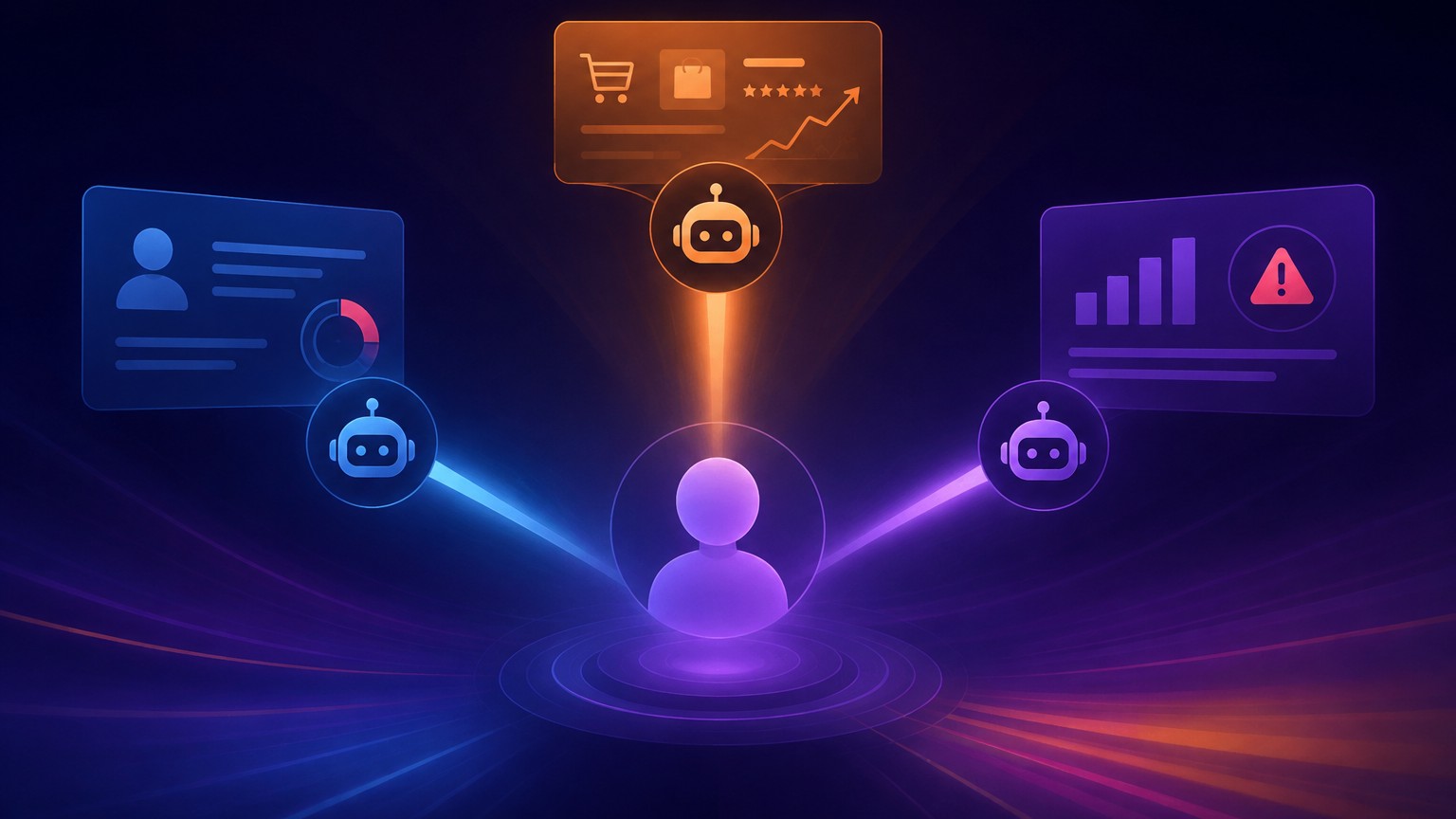
AI CRM Trends Transforming Customer Experience in 2026

Insights / AI CRM Trends Transforming Customer Experience in 2026

Ai CRM Trend Transforming Customer Experience

Customer expectations are evolving faster than ever before. Modern consumers no longer want delayed responses, disconnected support teams, repetitive communication, or generic marketing campaigns. They expect businesses to understand their intent, personalize every interaction, respond instantly, and deliver seamless experiences across every channel.

This shift is forcing enterprises to rethink traditional customer relationship management systems.

Legacy CRM platforms were originally designed to store customer information and track sales activities. But in 2026, enterprises need much more than static databases and manual workflows. Businesses now require intelligent systems capable of understanding customer behavior, predicting engagement patterns, automating conversations, orchestrating campaigns, and optimizing customer journeys in real time.

This is why AI CRM platforms are becoming the foundation of modern customer experience strategies.
AI-powered CRM is no longer just a competitive advantage. It is rapidly becoming a business necessity for enterprises focused on improving customer engagement, increasing retention, accelerating revenue growth, and reducing operational inefficiencies.

  • What Is an AI CRM?
  • Why Traditional CRM Platforms Are Struggling
  • AI CRM Trends Transforming Customer Experience in 2026

  • Predictive Customer Engagement Is Becoming a Core Business Strategy
  • Conversational AI Is Becoming Central to Customer Experience
  • Hyper-Personalization Is Becoming the New Standard
  • Unified Customer Intelligence Is Replacing Data Silos
  • AI Campaign Orchestration Is Driving Marketing ROI
  • AI CRM Platforms Are Improving Customer Retention
  • Industries Leading AI CRM Adoption
  • Why AI CRM Matters for Revenue Growth
  • How Worktual Is Powering AI-Native Customer Experience
  • The Future of Customer Experience Is AI-Native
  • FAQs

What Is an AI CRM?

AI CRM refers to an AI-native customer relationship management platform that combines customer data, automation, predictive analytics, conversational AI, and omnichannel engagement into one intelligent ecosystem.

Unlike traditional CRM systems that primarily act as databases, AI CRM platforms continuously learn from customer interactions and automatically optimize customer journeys using artificial intelligence.

Modern AI CRM systems can:

  • predict customer intent
  • automate customer engagement
  • personalize experiences in real time
  • identify churn risks
  • automate lead qualification
  • optimize campaign performance
  • improve customer retention
  • accelerate sales conversions

As enterprises move toward AI-native digital transformation, AI CRM is becoming central to customer lifecycle management and revenue optimization.

Why Traditional CRM Platforms Are Struggling

Traditional CRM systems were built for a different era of customer engagement.

Most legacy platforms still rely heavily on:- 

  • manual data entry
  • fragmented customer information
  • siloed communication channels
  • static reporting
  • reactive customer engagement
  • disconnected marketing workflows

These limitations create friction across the customer journey.

Businesses often struggle with:- 

  • inconsistent customer experiences
  • poor lead visibility
  • delayed customer responses
  • disconnected support operations
  • inefficient sales processes
  • weak personalization
  • low customer retention

In contrast, AI-native CRM platforms operate in real time and continuously adapt to customer behavior.

This shift from reactive CRM to predictive AI CRM is one of the biggest transformations in customer experience management in 2026.

AI CRM Trends Transforming Customer Experience in 2026

AI-Native CRM Is Replacing Traditional CRM Systems

One of the biggest trends shaping customer experience is the rise of AI-native CRM platforms.

Instead of adding AI features on top of outdated systems, enterprises are now adopting CRM platforms built entirely around artificial intelligence.

AI-native CRM systems provide:

  • predictive engagement
  • autonomous workflows
  • intelligent customer segmentation
  • AI-driven personalization
  • conversational automation
  • real-time customer intelligence

This allows businesses to move beyond basic customer management and create fully intelligent engagement ecosystems.

Companies adopting AI-native CRM platforms are experiencing:-

  • faster response times
  • improved conversion rates
  • better customer retention
  • increased operational efficiency
  • stronger revenue growth

As AI adoption accelerates globally, AI-native CRM platforms are becoming the future of enterprise customer engagement.

Predictive Customer Engagement Is Becoming a Core Business Strategy- Provide H3 Tag

In 2026, enterprises are shifting from reactive engagement to predictive engagement.

Traditional CRM systems wait for customers to take action before responding. AI CRM platforms proactively identify customer intent and trigger personalized engagement automatically.

AI-powered predictive engagement helps businesses:-

  • identify high-intent leads
  • predict churn behavior
  • automate customer retention campaigns
  • optimize upselling opportunities
  • personalize communication in real time

Predictive customer engagement improves both customer experience and business performance by delivering the right interaction at the right moment.

This trend is especially important for:-

  • Ecommerce
  • Healthcare
  • Finance
  • Telecommunications
  • Real Estate
  • Hospitality

Industries with high customer interaction volumes are increasingly investing in predictive AI CRM systems to improve engagement and maximize customer lifetime value.

Conversational AI is Becoming Central to Customer Experience

Customers now expect instant communication across multiple channels.

As a result, conversational AI is becoming deeply integrated into AI CRM platforms.

Modern conversational AI systems support:

  • AI chatbots
  • voicebots
  • multilingual customer engagement
  • WhatsApp automation
  • live chat automation
  • AI-powered ticketing
  • intelligent call routing

AI CRM platforms now use conversational AI to automate large portions of customer interaction workflows while maintaining personalization and contextual understanding.

This trend is transforming customer support operations by:

  • reducing response times
  • improving customer satisfaction
  • lowering support costs
  • increasing scalability

Businesses that implement conversational AI within their CRM ecosystems can provide faster and more seamless customer experiences without increasing operational overhead.

Hyper-Personalization Is Becoming the New Standard

Generic customer communication is rapidly losing effectiveness.

AI CRM platforms now analyze:

  • customer behavior
  • browsing activity
  • purchase history
  • engagement patterns
  • sentiment signals
  • communication preferences

to deliver highly personalized customer experiences across every touchpoint.

Hyper-personalization allows businesses to:

  • improve customer engagement
  • increase conversion rates
  • strengthen customer loyalty
  • optimize campaign performance

In 2026, customers increasingly expect brands to understand their preferences automatically.

AI-powered personalization is helping enterprises create more human, relevant, and intelligent customer journeys.

Unified Customer Intelligence Is Replacing Data Silos

One of the biggest challenges enterprises face is fragmented customer data.

Customer information is often spread across:

  • CRM systems
  • support platforms
  • marketing tools
  • ecommerce systems
  • communication channels
  • analytics platforms

AI CRM platforms are now evolving into unified intelligence ecosystems that centralize customer data into one intelligent platform.

Unified customer intelligence enables businesses to:

  • create 360-degree customer profiles
  • improve cross-channel visibility
  • optimize engagement strategies
  • automate lifecycle management
  • improve operational decision-making

This trend is significantly improving enterprise customer experience consistency and engagement efficiency.

AI Campaign Orchestration Is Driving Marketing ROI

Traditional marketing automation tools often struggle with disconnected workflows and limited personalization.

AI CRM platforms now use intelligent campaign orchestration to automate customer journeys dynamically.

AI campaign orchestration helps businesses:

  • personalize campaigns in real time
  • automate customer segmentation
  • optimize messaging
  • improve customer targeting
  • increase marketing ROI

In 2026, enterprises are moving toward AI-driven customer lifecycle marketing instead of static campaign workflows.

This trend is enabling brands to create more intelligent and adaptive customer engagement strategies.

Ai CRM Trends Transforming CX

AI CRM Platforms Are Improving Customer Retention

Customer acquisition costs continue to rise across almost every industry.

As a result, businesses are prioritizing retention-focused CRM strategies.

AI CRM platforms help enterprises improve retention through:

  • churn prediction
  • proactive engagement
  • personalized communication
  • automated follow-ups
  • customer lifecycle intelligence

Retention-focused AI CRM strategies are becoming critical for sustainable business growth


Businesses that successfully improve retention often experience:

  • higher customer lifetime value
  • stronger recurring revenue
  • reduced acquisition costs
  • improved customer loyalty

In 2026, AI-driven retention optimization is becoming one of the most important priorities for enterprise customer experience teams.

Industries Leading AI CRM Adoption

Ecommerce

Ecommerce businesses are using AI CRM platforms to:

  • automate customer support
  • personalize shopping experiences
  • improve abandoned cart recovery
  • optimize retention campaigns
  • increase conversion rates

AI-powered ecommerce engagement is becoming essential for competitive growth.

Healthcare

Healthcare providers are implementing AI CRM systems to:

  • improve patient communication
  • automate appointment engagement
  • streamline support operations
  • personalize patient journeys

AI CRM is helping healthcare organizations improve operational efficiency and patient experience simultaneously.

Telecommunications

Telecom companies are leveraging AI CRM to:

  • automate customer service
  • improve omnichannel engagement
  • reduce ticket volumes
  • optimize customer retention

AI-native telecom engagement platforms are becoming critical for service scalability.

Finance

Financial institutions are using AI CRM platforms to:

  • improve onboarding
  • automate customer communication
  • personalize financial engagement
  • reduce churn

AI-powered customer lifecycle management is transforming financial customer experiences.

Why AI CRM Matters for Revenue Growth

AI CRM is no longer just about managing customer relationships.

It is becoming a revenue acceleration platform.

AI-powered CRM systems help businesses:

  • improve lead quality
  • increase sales efficiency
  • accelerate conversions
  • optimize customer journeys
  • improve retention
  • increase customer lifetime value

Enterprises investing in AI CRM are creating more scalable, intelligent, and profitable customer engagement ecosystems.

How Worktual Is Powering AI-Native Customer Experience

Worktual UK provides an AI-native unified intelligence platform designed to help enterprises modernize customer engagement, automate operations, and accelerate growth.

Worktual combines:

  • AI CRM
  • conversational AI
  • omnichannel engagement
  • predictive analytics
  • AI contact center
  • campaign orchestration
  • customer lifecycle intelligence

into one intelligentecosystem built for modern enterprises.

Businesses using AI-native engagement platforms like Worktual can improve:

  • customer experience
  • engagement performance
  • operational efficiency
  • marketing ROI
  • customer retention
  • revenue growth

The Future of Customer Experience Is AI-Native

Customer experience is rapidly evolving from reactive communication to intelligent, predictive, and AI-driven engagement.

In 2026, enterprises that continue relying on disconnected legacy CRM systems will struggle to meet growing customer expectations.

AI CRM platforms are enabling businesses to:

  • automate engagement
  • personalize customer journeys
  • optimize lifecycle management
  • improve retention
  • scale customer support
  • accelerate revenue growth

As AI-native technologies continue transforming enterprise operations, AI CRM is becoming the foundation of next-generation customer experience management.

Businesses that adopt AI-native customer engagement strategies early will be better positioned to lead the future of digital customer experience.

FAQs

1. What are the biggest AI CRM trends in 2026?

The biggest AI CRM trends in 2026 include predictive customer engagement, AI-native CRM platforms, conversational AI automation, hyper-personalization, omnichannel customer experiences, AI campaign orchestration, and unified customer intelligence. Businesses are increasingly adopting AI-powered CRM systems to improve customer engagement, automate operations, increase retention, and accelerate revenue growth.

2. How does AI CRM improve customer experience?

AI CRM improves customer experience by using artificial intelligence to automate engagement, personalize communication, predict customer intent, and deliver faster support across multiple channels. AI-powered CRM platforms help businesses create seamless customer journeys with real-time interactions, predictive recommendations, and intelligent automation.

3. What is the difference between traditional CRM and AI CRM?

Traditional CRM systems mainly focus on storing customer information and tracking sales activities, while AI CRM platforms use artificial intelligence to automate workflows, predict customer behavior, personalize engagement, and optimize customer journeys in real time. AI CRM is more proactive, intelligent, and scalable compared to legacy CRM systems.

4. Why are enterprises moving toward AI-native CRM platforms?

Enterprises are moving toward AI-native CRM platforms because traditional systems often struggle with fragmented data, manual workflows, and limited personalization. AI-native CRM platforms provide predictive analytics, conversational AI, automation, omnichannel engagement, and customer lifecycle intelligence, helping businesses improve operational efficiency and customer satisfaction.

5. How does AI CRM increase revenue and customer retention?

AI CRM increases revenue and customer retention by identifying high-intent leads, predicting churn risks, automating personalized engagement, improving customer support, and optimizing customer journeys. AI-powered CRM platforms help businesses increase conversion rates, improve customer lifetime value, reduce acquisition costs, and strengthen long-term customer relationships.

Related Posts

AI-First Campaign Management

AI-First Campaign Management and Unified Intelligence: Improving Customer Engagement, Campaign Performance, and Marketing ROI

Customer support costs are rising as businesses handle increasing volumes of customer interactions across channels. Customers expect fast, accurate, and consistent responses for queries ranging from billing and account access to product support and service issues. Meeting these expectations requires significant investment in staffing, infrastructure, training, and technology. As demand grows, support teams often struggle to scale efficiently, leading to longer response times, inconsistent service quality, and rising operational costs.

Unified Intelligence for Healthcare

Unified Intelligence AI for Healthcare: Improving Patient Access, Engagement, and Revenue Performance

Customer support costs are rising as businesses handle increasing volumes of customer interactions across channels. Customers expect fast, accurate, and consistent responses for queries ranging from billing and account access to product support and service issues. Meeting these expectations requires significant investment in staffing, infrastructure, training, and technology. As demand grows, support teams often struggle to scale efficiently, leading to longer response times, inconsistent service quality, and rising operational costs.

Unified Intelligence AI for Telecommunications

Unified Intelligence AI for Telecommunications: Reducing Churn, Increasing ARPU, Optimizing Cost Efficiency

Telecommunications providers operate in a market defined by intense competition, price sensitivity, infrastructure investment demands, and rising expectations for seamless digital service. Revenue growth is harder to sustain when switching barriers are low and customers compare offers instantly. Many operators also manage fragmented legacy systems, inconsistent service journeys, and rising support costs. When network quality, billing clarity, or response speed falls short, dissatisfaction grows quickly.