What Is an AI CRM? A Simple Guide for Indian Businesses (2026)

Insights / What Is an AI CRM? A Simple Guide for Indian Businesses (2026)
What is an Ai CRM

What Is an AI CRM?

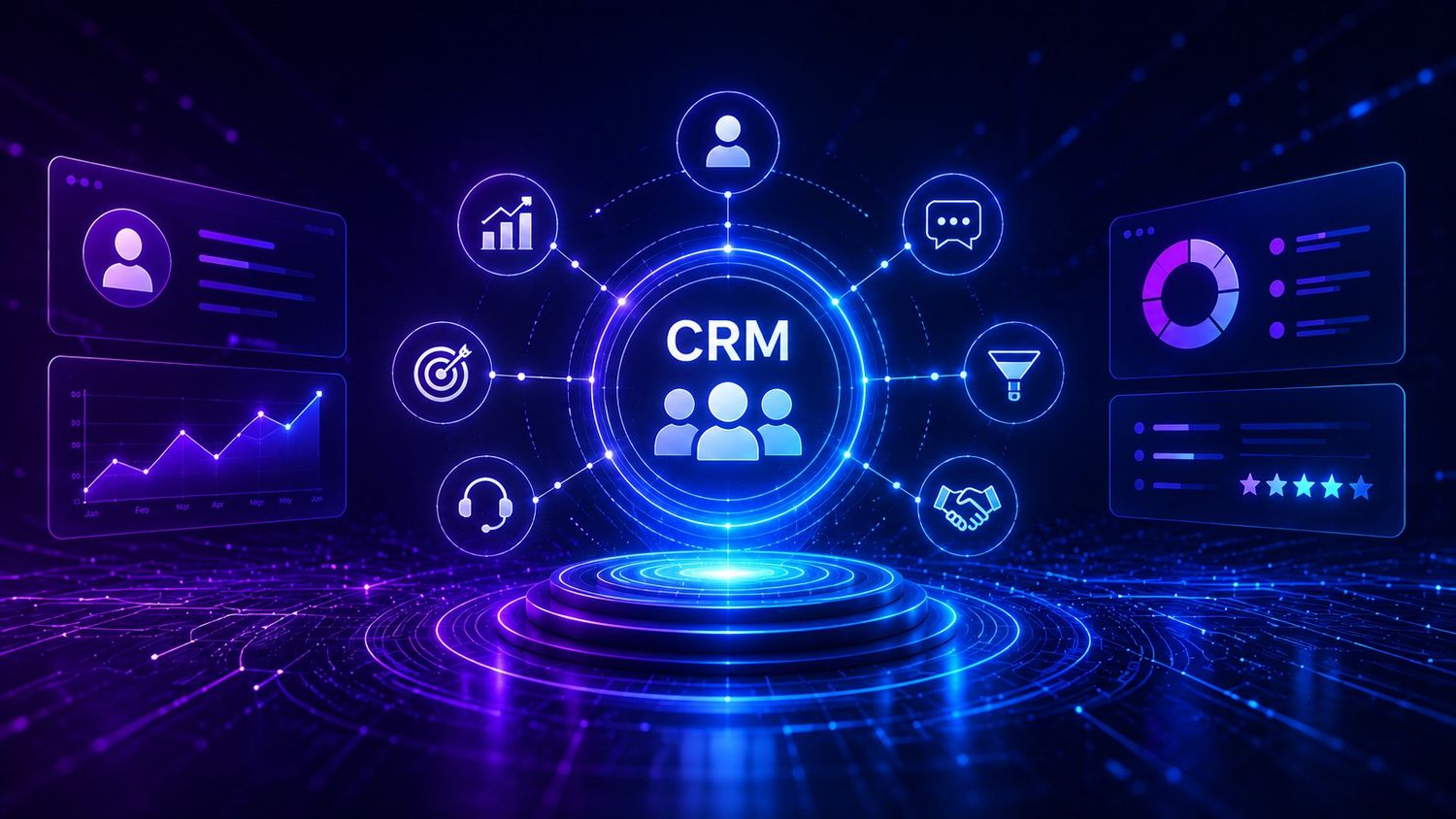
An AI CRM is customer relationship management software with artificial intelligence built into its core workflows — scoring leads, drafting follow-ups, forecasting deals, and prioritising WhatsApp, call, and email responses automatically, rather than just storing contact records. The shift is from a system that holds data to one that acts on it.

  • What Is an AI-Native CRM?
  • How an AI CRM Differs From a Traditional CRM
  • How AI CRM Actually Works
  • AI-Native vs AI-Added: Is Your Current CRM Actually an “AI CRM”?
  • Is an AI CRM Safe Under India’s DPDP Act?
  • What Does an AI CRM Cost in India?
  • Key Features of an AI CRM
  • Who Uses an AI CRM in India?
  • FAQs

How an AI CRM Differs From a Traditional CRM

For most Indian sales teams, the working day isn’t email-first — it’s IndiaMART and Justdial leads, WhatsApp conversations, and phone-based selling. That’s exactly where the difference between the two shows up most clearly.

DimensionTraditional CRMAI CRM
Lead captureManual entry from IndiaMART/JustdialCaptured and logged automatically
WhatsApp repliesWhoever's free, whenever they see itPrioritised automatically by intent
Lead qualificationManual or rule-based scoringContinuously updated by behaviour
Call handlingNotes typed up after, if at allAI call summaries logged automatically
ForecastingBased on rep-reported stageBased on actual behaviour patterns
Decision makingRequires human interpretationRecommends the next action directly

How AI CRM Actually Works

A lead comes in through IndiaMART on a Tuesday afternoon, one of thirty that week. In a traditional CRM, it sits in the same list as the other twenty-nine until someone works through them in order. In an AI CRM, it’s already scored against the traits of previously won deals, prioritised above colder leads, and a WhatsApp opener is drafted and waiting — before anyone has even opened the lead list.

The mechanism runs in order: data capture (web form, WhatsApp, IndiaMART, call log), enrichment, pattern analysis, prediction or recommendation, and then action — a drafted reply, an alert, or auto-assignment to the right rep.

AI-Native vs AI-Added: Is Your Current CRM Actually an “AI CRM”?

A simple test cuts through the marketing: remove the AI layer. If the product still works as a complete CRM, the AI was added on top of an existing system. If you’re left with just a database, the AI was native to the platform from the start. Zoho CRM’s Zia, Freshsales’ Freddy AI, Kylas, and LeadSquared all sit at different points on this spectrum; none of this is a criticism of any of them, but it’s worth applying the test directly rather than taking “AI CRM” at face value. Worktual takes the AI-native route by design, with Cognitive CDP unifying customer data as the foundation, not an add-on.

What is Ai CRM

Is an AI CRM Safe Under India's DPDP Act?

Yes, provided the vendor supports proper consent capture, a signed Data Processing Agreement, and clear data fiduciary/data processor roles, an AI CRM can operate lawfully under the Digital Personal Data Protection (DPDP) Act, 2023 and the DPDP Rules, 2025.

Most CRM vendors act as the data processor, while the business using the CRM remains the data fiduciary and stays accountable — a distinction worth clarifying directly with any vendor, since it’s a common point of confusion. The DPDP Rules also introduce a Consent Manager framework, becoming operational from 13 November 2026, giving individuals a single interface to grant or withdraw consent worth designing a CRM’s consent capture around now, rather than after enforcement begins. Practical questions worth asking: where the data is stored, how a breach would be reported to the Data Protection Board of India, and how deletion or access requests are handled inside the CRM itself.

What Does an AI CRM Cost in India?

Indicative INR pricing, excluding GST unless stated:

The choice between per-user and flat-rate pricing is a genuine decision point, not just a marketing angle — per-user pricing (Zoho, Freshsales) suits smaller, stable teams, while flat-rate, unlimited-user pricing (Kylas) can work out cheaper once a team scales past a certain size. GST applies on top of list pricing unless a vendor states otherwise.

Key Features of an AI CRM

  • Predictive, next-best-action lead scoring — updated continuously, not set once at intake.
  • WhatsApp-first prioritisation — genuinely essential, given WhatsApp converts at 28–38% versus 1.8–2.5% for websites.
  • Vernacular language support — handling enquiries in Hindi and regional languages, not English only.
  • AI call summaries — for telecalling and field-sales teams, logged without manual typing.
  • IndiaMART and Justdial lead capture — built in, not stitched together with a separate tool.

Who Uses an AI CRM in India?

  • A WhatsApp-heavy D2C or retail seller uses automatic reply prioritisation to catch a buying signal before it goes cold.
  • A real estate or education business managing high lead volume from IndiaMART, Justdial, and ads uses lead scoring to work its best enquiries first.
  • A BFSI or field-sales team uses AI call summaries and mobile access so a telecaller’s notes are logged without extra typing.
  • An SME in a tier-2 or tier-3 city weighs per-user pricing against a flat-rate, unlimited-user model as the team grows.

Next Step

If you want to see how an AI-native architecture handles WhatsApp, IndiaMART leads, and telecalling in practice, Worktual’s team can walk you through a live demo built around your own sales data.

Book a demo – Book a Free Worktual AI Demo — See It Live in 30 Minutes.

FAQs

1. What is an AI CRM in simple terms?

Software that manages customer relationships with AI built into its core workflows — scoring leads, drafting follow-ups, and prioritising responses automatically, rather than only storing records.

2. What is the difference between a CRM and an AI CRM?

A CRM stores customer data and requires a person to act on it. An AI CRM interprets that data and recommends or triggers the next action automatically.

3. Is an AI CRM the same as a chatbot added to a CRM?

No. A chatbot is one feature. An AI CRM has AI built into lead scoring, forecasting, and workflow automation throughout the platform, not confined to a chat window.

4. Is an AI CRM compliant with India’s DPDP Act?

It can be, provided the vendor supports proper consent capture, a signed Data Processing Agreement, and clearly defined data fiduciary and data processor roles.

5. Who is responsible for DPDP compliance — the business or the CRM vendor?

The business using the CRM is the data fiduciary and remains accountable. The CRM vendor typically acts as the data processor, handling data on the business’s behalf.

6. Does an AI CRM need to store customer data inside India?

Not necessarily under the DPDP Act itself, but many Indian businesses prefer in-country hosting for operational and trust reasons — worth confirming directly with any vendor.

7. What happens if a CRM has a data breach in India?

The breach must be reported to the Data Protection Board of India, and affected individuals notified, under the DPDP Act’s breach notification requirements.

8. How much does an AI CRM cost in India?

Per-user pricing typically runs ₹800–₹6,000 per user per month depending on the platform and tier; flat-rate, unlimited-user plans start from roughly ₹21,000 per month.

9. Is a flat-rate CRM better than a per-user CRM for Indian teams?

It depends on team size: per-user pricing suits smaller, stable teams, while flat-rate pricing often works out cheaper once a team scales past a certain size.

10. Does an AI CRM replace salespeople?

No. It removes manual pattern-spotting and repetitive drafting, but a person still builds the relationship and makes the final call on each deal.