
From Reactive Support to Proactive Care: What Scaling Enterprises in India Need to Rethink

Insights / From Reactive Support to Proactive Care: What Scaling Enterprises in India Need to Rethink

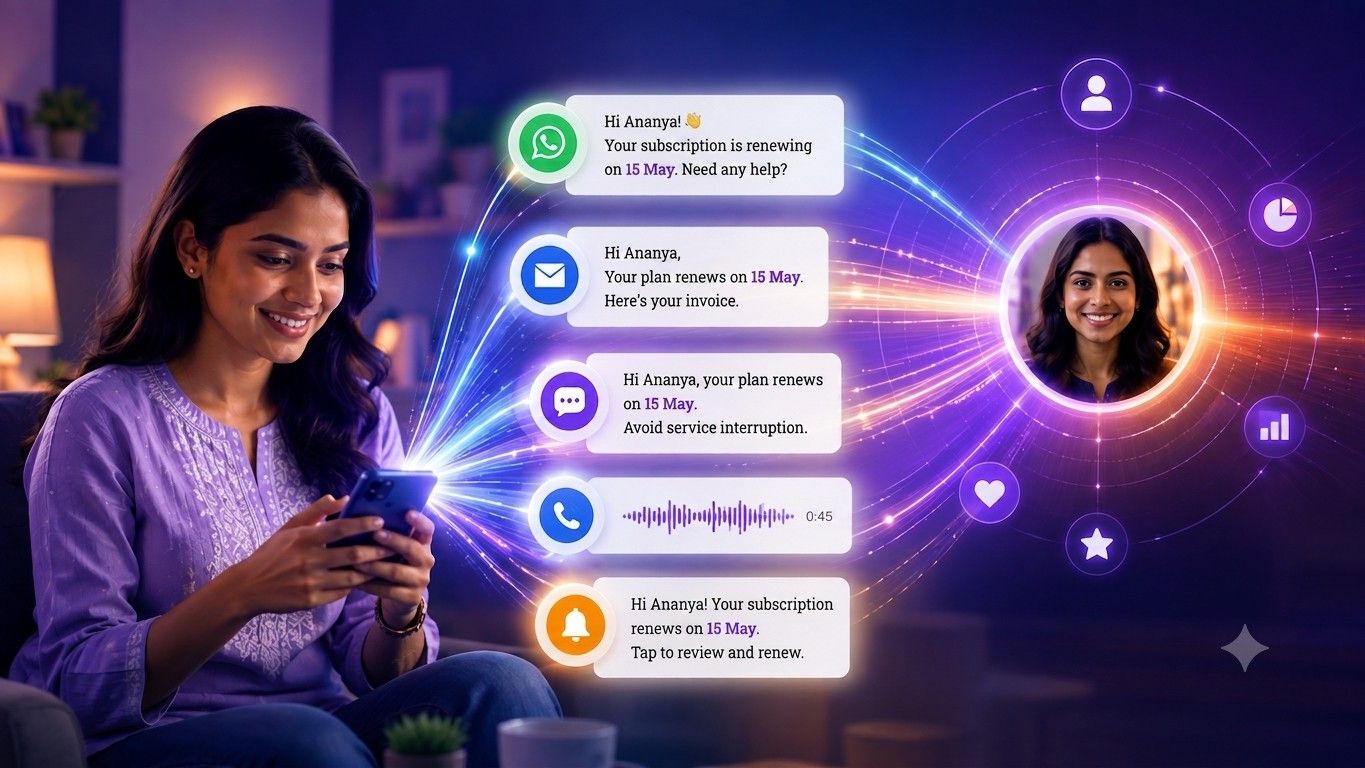
Proactive Customer Care India

A loan applicant hears nothing for five days. Unsure whether the application is delayed or simply being processed, she calls customer supportnot because something went wrong, but because nobody told her everything was progressing as expected.

That single avoidable call highlights the biggest weakness of reactive customer support. Many Indian enterprises still wait for customers to report a problem before taking action. As businesses scale, this approach increases ticket volumes, stretches support teams and drives up operational costs.

Today, AI and customer intelligence enable organisations to detect risks, predict customer needs and communicate proactively before customers feel the need to reach out. The future of customer care isn’t about hiring more agentsit’s about preventing unnecessary support requests in the first place.

  • Why Reactive Support Breaks at Scale
  • What Is Proactive Customer Care?
  • Why Indian Enterprises Need to Rethink Support
  • Reactive Support vs Proactive Customer Care
  • The Cost of Staying Reactive
  • Building a Proactive Customer Care Strategy
  • Technologies That Power Proactive Customer Care
  • Buyer’s Checklist for Proactive Customer Care Platforms
  • Questions Every Procurement Team Should Ask
  • How Worktual Enables Proactive Customer Care
  • FAQs

Why Reactive Support Breaks at Scale

Reactive support works when customer volumes are low. As businesses grow, however, support teams spend more time responding to predictable enquiries than solving complex problems.

Consider a few common examples:

  • A BFSI contact centre answers hundreds of KYC renewal queries every week.

  • An ecommerce support team is flooded with “Where is my order?” requests, even though delivery updates are already available.

  • A telecom operator handles thousands of calls during a network outage because customers weren’t informed proactively.

In every case, support costs increase, not because service quality has declined, but because customers are forced to ask questions the business could have answered first.

The result is higher ticket volumes, longer response times, agent burnout and SLA breaches, leaving less time for the interactions that genuinely require human expertise.

What Is Proactive Customer Care?

Proactive customer care is the ability to identify potential issues, anticipate customer needs and take action before a support request is raised. Instead of waiting for customers to report a problem, businesses use AI, customer intelligence and automation to detect risks, trigger timely communications and resolve routine issues before they escalate.

Whether it’s sending a loan application update, reminding a customer to renew a policy, notifying them of a delivery delay or alerting them to unusual account activity, proactive customer care keeps customers informed without requiring them to ask.

The shift is simple but significant: from reacting to customer issues to preventing them.

Why Indian Enterprises Need to Rethink Support

India’s digital economy is expanding rapidly, bringing with it higher customer expectations and significantly larger support volumes. Customers expect instant updates, personalised communication and the flexibility to interact across channels like WhatsApp, voice, email and mobile apps.

For growing enterprises, simply adding more agents is no longer a sustainable solution. As customer interactions increase, support costs rise, response times become harder to maintain and service quality can suffer.

Proactive customer care offers a different approach. By combining AI, customer intelligence and automation, organisations can anticipate customer needs, reduce avoidable enquiries and deliver timely, personalised support at scale.

Reactive Support vs Proactive Customer Care

DimensionReactive SupportProactive Customer Care
TriggerCustomer reports the issueAI detects the issue early
Follow-upManualAutomated engagement
Ticket volumeHighPrevented before it forms
Team sizeLarge support teamsAI-assisted operations
ResponseDelayedReal-time intervention
WorkflowsStaticPredictive
Cost per interactionHigherLower
ReportingReactivePredictive insight

The Cost of Staying Reactive

Reactive support doesn’t just increase ticket volumesit drives up costs, reduces efficiency and puts pressure on support teams. As customer interactions grow, simply adding more agents becomes an expensive and unsustainable approach.

The impact includes:

  • Higher support costs as ticket volumes grow.

  • Rising hiring costs just to maintain service levels.

  • SLA breaches during peak demand.

  • Lower agent productivity due to repetitive enquiries.

  • Customer churn caused by delays and poor communication.

  • Escalation overload, leaving less time for complex customer issues

Building a Proactive Customer Care Strategy

Proactive customer care requires more than faster response times. It combines customer intelligence, AI and automation to identify issues early, communicate proactively and resolve routine enquiries before they become support tickets.

Key elements include:

  • Customer Intelligence – A unified view of customer profiles, behaviour and interaction history. 
  • AI Prediction – Identifies churn risk, customer intent and potential service issues before they escalate. 
  • Omnichannel Monitoring – Tracks interactions across WhatsApp, voice, email, web and mobile apps. 
  • Automated Actions – Sends timely notifications, reminders and alerts based on customer context. 
  • Intelligent Escalation – Resolves routine enquiries automatically and routes complex cases to the right agent with full context.

Technologies That Power Proactive Customer Care

AI agents, voice AI, predictive analytics, and customer intelligence sit on top of an Intelligent CRM and Customer Data Platform (CDP), with workflow automation, knowledge management, and real-time analytics tying the whole system together into one continuously updated picture of the customer

Proactive Customer Support

KPIs That Matter

  • Ticket volume reduction and First Contact Resolution (FCR).
  • Average Handle Time (AHT) and cost per ticket.
  • Customer retention and SLA compliance.
  • Agent productivity and self-service adoption.

Buyer's Checklist for Proactive Customer Care Platforms

When evaluating a proactive customer care platform, look beyond ticket management and assess whether it can help your organisation anticipate customer needs, automate routine interactions and scale support efficiently.

AI & Automation

  • Predictive analytics 
  • AI agents 
  • Intent detection 
  • Workflow automation 

Customer Intelligence

  • Unified customer profile 
  • Customer behaviour analysis 
  • Omnichannel interaction history 
  • Next-best-action recommendations 

Enterprise Integrations

  • CRM and ERP 
  • Contact centre 
  • WhatsApp Business API 
  • Payment gateways and business applications 

Security & Compliance

  • DPDP readiness 
  • Role-based access control 
  • Audit logs 
  • Encryption 

Reporting & Performance

  • Real-time dashboards 
  • SLA monitoring 
  • Customer health scoring 
  • Ticket volume trends 

Questions Every Procurement Team Should Ask

  • Can the AI predict customer issues before a ticket is even created?
  • How does the platform actually reduce ticket volume, not just handle it faster?
  • Does it support WhatsApp and voice AI natively?
  • Can it unify customer data across every channel into one profile?
  • Is the platform DPDP-ready, with data handling confirmed directly?
  • Can AI escalate a case to a human agent with full context attached?
  • How quickly can the platform scale across multiple business units?

How Worktual Enables Proactive Customer Care

Worktual maps directly to this framework: an AI-powered Intelligent CRM, AI agents, and voice AI operating across every channel, unified by Cognitive CDP into one customer profile. Workflow automation and predictive engagement turn that unified profile into the proactive notifications, renewal alerts, and early risk flags this article has described with real-time analytics showing which interventions are actually reducing ticket volume, not just handling tickets faster.

Conclusion

India’s fastest-growing enterprises cannot scale customer support simply by adding more agents. Sustainable growth comes from preventing issues before they become tickets. Organisations that combine AI, customer intelligence, automation, and proactive engagement reduce operational cost, improve service quality, and build a support model that scales with the business rather than against it.

Book a Demo

FAQs

1. What is proactive customer care?

An approach that predicts customer issues and intervenes automatically before a complaint is raised, rather than waiting for the customer to report a problem first.

2. How is proactive customer care different from reactive support?

Reactive support responds after a customer reports an issue. Proactive care detects the risk early and resolves or communicates it before the customer needs to reach out.

3. How does AI reduce customer support tickets?

By predicting issues a delayed delivery, an upcoming renewal, unusual account activity and resolving or communicating them automatically before they generate a support enquiry.

4. What industries benefit most from proactive customer care?

BFSI, ecommerce, healthcare, telecom, and logistics see some of the clearest gains, given high enquiry volumes and predictable, time-sensitive events.

5. Can proactive customer care reduce operational costs?

Yes. Preventing a ticket is consistently cheaper than resolving one, and fewer repetitive queries free agents for the cases that genuinely need human judgement.

6. What role does WhatsApp play in proactive customer engagement?

A central one in India specifically WhatsApp is where most customers already expect updates, reminders, and alerts to arrive, not a secondary channel.

7. How does predictive analytics improve customer support?

By scoring risk and forecasting issues from behaviour and interaction history, so a business can act before a problem escalates into a complaint.

8. What is customer health scoring?

A continuously updated score reflecting how satisfied or at-risk a customer is, based on their behaviour and interaction history, used to prioritise proactive outreach.

9. How do AI agents support proactive service?

By monitoring interactions across channels, resolving routine requests directly, and escalating complex cases to a human agent with full context already attached.

10. Is proactive customer care suitable for BFSI?

Yes, loan-status updates, payment reminders, fraud alerts, and KYC renewal notifications are all naturally proactive use cases well suited to the sector.

Related Posts

Ai in Healthcare Contact Centres

AI in Healthcare Contact Centres (CCaaS): The Complete India Guide

It’s past midnight, and a patient’s family member calls a hospital helpline to check if a diagnostic report is ready. After waiting several minutes, they finally reach an agent only to be told the lab system isn’t available and they’ll need to call back the next morning.

It’s a frustrating experience for the patient and an equally frustrating one for the hospital.

AI-Native Cognitive Data Platform for Ecommerce

AI-Native Cognitive Customer Data Platforms for Ecommerce: Improving Customer Retention, Purchase Intelligence, and Customer Lifetime Value

Indias ecommerce industry continues to expand at a remarkable pace. Valued at approximately US$125 billion in 2024, the market is projected to reach US$345 billion by 2030, growing at a compound annual growth rate (CAGR) of 18.4% (IBEF). As businesses compete across marketplaces, quick commerce platforms, mobile applications, social commerce, and D2C channels, sustainable growth increasingly depends not only on acquiring new customers but also on increasing repeat purchases, strengthening customer loyalty, and maximising Customer Lifetime Value (CLV).

Best Ai CRM India

Best AI CRM in India 2026: Top AI-Powered CRM Platforms Compared

In the food and beverage (F and B) sector, hospitality operators such as restaurants, pubs, and bars operate in a tightly managed commercial environment where revenue depends on converting demand into confirmed bookings, maximising spend per guest, and driving repeat visits over time. Covers, sitting time, menu mix, and return frequency all influence profitability, while rising labour costs and margin pressure leave little room for operational waste.